
Bid day is unforgiving. Once a bid is submitted, there’s rarely a chance to quietly fix a mistake and the two most common outcomes of an error are either losing a job you should have won, or winning a job you can’t actually deliver at the price you quoted. This checklist covers the final checks worth running before any bid goes out the door.
1. Review Final Quantities Against the Plans
Before anything else, confirm that the quantities used in the estimate actually match the most current set of plans and specs not an earlier revision.
- Cross-check that every page of the drawings was included in the takeoff, especially on projects with a late set of addenda or revised pages
- Confirm that quantities for major cost drivers (concrete volume, steel tonnage, square footage of finishes) are reasonable relative to the overall project size, a quick sanity check can catch a takeoff error that a detailed review might miss
- Verify that any addenda issued during the bid period have been incorporated into the final numbers, not just noted and forgotten
2. Confirm Updated Material Pricing
Material costs can shift meaningfully even within the bid period, especially in a volatile pricing environment. Before submission:
- Confirm that pricing used in the estimate reflects current market rates, not pricing pulled weeks earlier when the takeoff was first started
- Double-check pricing on the materials most exposed to volatility steel, copper, lumber, and other commodity-driven categories tend to move the fastest
- For longer-duration projects, confirm that an escalation clause or contingency has been built in to account for price movement between bid and actual purchase
3. Verify Labor Rates and Productivity Assumptions
Labor cost errors are harder to spot than material errors because they depend on assumptions rather than a simple unit price.
- Confirm labor rates reflect current local market conditions, including any prevailing wage requirements on public projects
- Check that productivity assumptions account for site-specific conditions difficult access, tight urban sites, or extreme weather can all reduce crew output compared to a standard assumption
- Confirm that labor burden (payroll taxes, insurance, benefits) is included in the loaded labor rate, not just base wages
4. Check Overhead, Profit, and Contingency Inclusion
It’s surprisingly common for a rushed bid to accidentally omit or miscalculate overhead and profit, especially when a bid is assembled under deadline pressure from multiple sub-estimates.
- Confirm that general conditions and project-specific overhead (site supervision, temporary facilities, permits) are included, not just the direct trade costs
- Verify the profit margin applied matches your company’s target, rather than defaulting to a placeholder percentage left over from a template
- Confirm a reasonable contingency is included, particularly for scope items with less certainty (existing conditions, unforeseen site issues) or for longer-duration projects exposed to price volatility
5. Review Scope Exclusions and Clarifications
An incomplete or unclear list of exclusions is one of the most common causes of disputes after a bid is awarded.
- Make sure every exclusion is explicitly stated in writing, verbal assumptions or “understood” exclusions cause problems later when there’s no documentation to point to
- Cross-check exclusions against the bid documents to make sure nothing required by the specs has been silently left out
- If subcontractor quotes were used to build the bid, confirm each sub’s exclusions have been captured and reconciled against the overall scope, so nothing falls into a gap between two subs’ quotes
6. Final Proofread of Bid Documents
Even a technically accurate bid can lose credibility, or get disqualified, over careless presentation errors.
- Check that all required bid forms are complete and signed, including bid bonds or other required attachments for public or larger commercial bids
- Confirm the math: totals, subtotals, and any alternates or unit prices should add up correctly and match across every page they appear on
- Make sure the project name, bid date, and submission details match exactly what was requested in the bid documents, small mismatches can create unnecessary questions or, in strict public bid processes, even disqualify a submission
Why a Second Set of Eyes Catches Costly Errors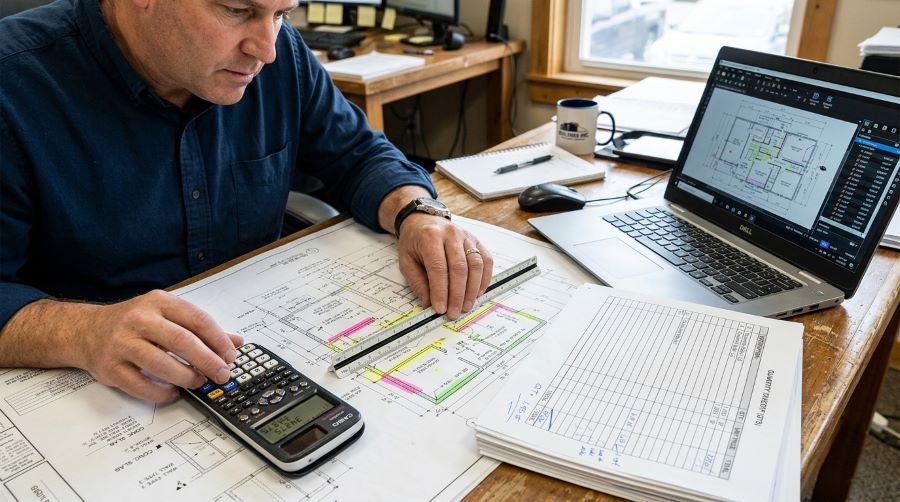
The person who built the estimate is often the worst-positioned person to catch their own mistakes, not because of a lack of skill, but because familiarity with a number makes it easy to skim past rather than scrutinize. A second reviewer, whether an internal colleague or an outside estimating partner, brings a few advantages:
- Fresh eyes are more likely to notice a quantity that looks off relative to the rest of the project, rather than accepting it because “that’s what the takeoff said”
- An outside reviewer isn’t anchored to assumptions made earlier in the estimating process and may ask questions that surface a gap
- A structured second review, done against a checklist like this one, catches procedural misses (a missing signature, an outdated price) that have nothing to do with estimating skill and everything to do with bid-day pressure
For contractors submitting bids under tight deadlines, building in even a short, structured review, internally or through an outside estimating partner, is one of the highest-value steps in the entire bidding process, because it’s the last chance to catch a mistake before it becomes a contractual obligation.
Final Words
Most bid-day mistakes aren’t complicated, they’re simple oversights that happen under time pressure: an outdated price, a missed exclusion, a quantity that didn’t get updated after the last addendum. A short, disciplined final review before submission is one of the cheapest forms of risk management available to a contractor.
Want a second review before your next bid goes out? Send us your estimate and we’ll check it against current pricing, standard exclusions, and common bid-day errors before you submit.