
Subcontractors don’t just compete on price, they compete on speed, clarity, and reliability. A general contractor deciding between five sub bids for the same scope isn’t only looking at the bottom-line number; they’re evaluating who they can trust to deliver that number without surprises. Here’s how to position your estimating process to win more of those decisions.
What GCs Look For in Sub Bids
Before improving your bid process, it helps to understand what’s actually happening on the other side of it. General contractors reviewing subcontractor bids are typically screening for:
- Completeness – does the bid clearly cover the full scope requested, with no ambiguous exclusions buried in fine print?
- Consistency with the plans and specs – does the pricing reflect what’s actually shown in the documents, or does it look like a rough guess?
- Responsiveness – did the sub turn the bid around within the timeframe requested, or did it show up late, forcing the GC to chase it down?
- Track record – has this sub delivered accurate numbers before, or have their past bids required renegotiation mid-project?
A GC assembling an overall project bid is under their own deadline pressure. Subs who make that process easier, with clear, complete, on-time numbers, get invited back to bid the next project, even if they weren’t the lowest number this time.
Importance of Fast Turnaround on Bid Requests
Timing matters more than most subcontractors realize. GCs often send the same bid request to multiple subs simultaneously, and:
- The subs who respond fastest get more attention and follow-up questions answered directly, rather than being an afterthought
- A late bid can arrive after the GC has already built their number around a competitor’s pricing, even if your number would have been better
- Consistently fast turnaround builds a reputation that gets you invited to bid future work directly, sometimes without having to compete against as many other subs
If your team is bottlenecked on takeoffs and pricing, that bottleneck is directly costing you bid opportunities, not just slowing down the ones you do respond to.
Presenting a Clean, Itemized, Professional Estimate
How a bid looks affects how much it’s trusted. A single lump-sum number with no breakdown makes a GC nervous, because there’s no way to tell what’s included. A clean, itemized bid, broken out by CSI division or scope item, does the opposite:
- It shows the GC exactly what’s covered, reducing the chance of a scope misunderstanding down the line
- It’s easier to compare against other subs bidding the same trade, which works in your favor if your pricing is competitive and well-supported
- It signals that your estimating process is disciplined, which GCs read as a proxy for how disciplined your fieldwork will be
Avoiding Common Pricing Pitfalls That Lose Bids
A handful of estimating mistakes show up again and again in losing sub bids:
- Missing quantities from an incomplete takeoff, which either makes the bid too low (and forces a painful renegotiation later) or too high (and loses the job outright)
- Pricing off outdated material costs, especially damaging in a year like 2026 when steel, copper, and lumber prices are moving quickly and unevenly across categories
- Failing to clarify exclusions, leaving the GC to guess what isn’t included — a fast way to get your bid disqualified for looking incomplete
- Underestimating labor productivity for unfamiliar site conditions, which erodes margin even on a bid that technically wins
Each of these traces back to the same root cause: a takeoff or pricing step that was rushed or done without current data.
Building Relationships Through Consistent, Reliable Numbers
Winning one bid is good. Being the sub a GC calls directly, without a formal bid process is better, and that only happens through a track record of numbers that hold up:
- If your bid price consistently matches what the job actually costs to deliver, GCs learn they can build their own numbers around your pricing with confidence
- Subs who submit accurate, well-supported estimates are far less likely to need contentious change orders mid-project, which protects the relationship
- Reliability compounds, each accurate bid makes it more likely you’re invited to the next one, and eventually to negotiated (non-competitive) work
How Outsourced Estimating Helps Subs Bid on More Projects at Once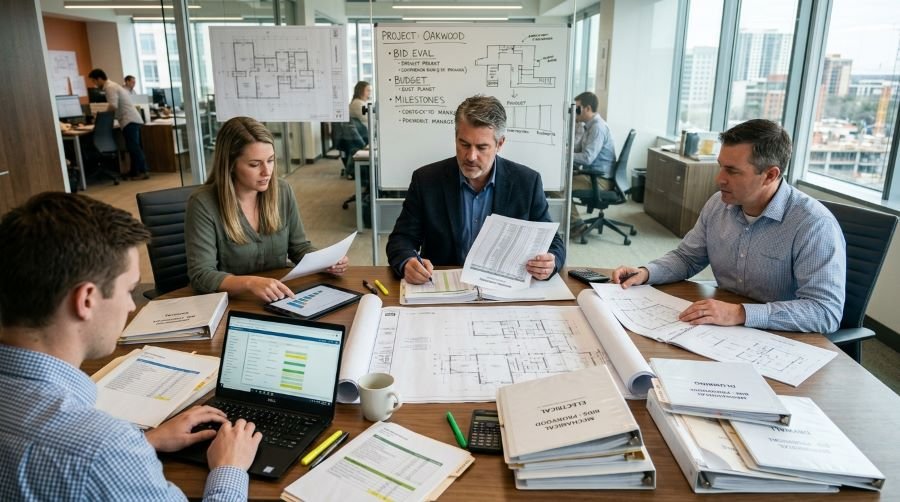
For many subcontractors, the limiting factor isn’t finding bid opportunities — it’s estimating capacity. A small in-house team (or an owner doing estimates between job-site visits) can only turn around so many bids per week. Outsourcing takeoffs and estimating helps in a few concrete ways:
- You can respond to more bid invitations simultaneously, instead of having to turn some down simply because your team is stretched thin
- Turnaround time improves, which as covered above directly affects how seriously your bid is considered
- Pricing reflects current material and labor costs without your team having to research it manually for every bid
- Your best people spend time on relationships and fieldwork, not buried in manual takeoffs for bids that may or may not convert
For subcontractors trying to grow, the ability to bid more jobs without sacrificing accuracy or turnaround is often the single biggest lever for winning more work.
Bottom Line
Winning more subcontractor bids isn’t only about cutting your price. It’s about being fast, clear, accurate, and consistent enough that GCs trust your numbers before they even open the bid. Subcontractors who fix their estimating process whether by tightening up in-house workflows or outsourcing the takeoff and pricing steps consistently win more work than those competing on price alone.
Ready to bid faster without sacrificing accuracy? Send us your next scope request and we’ll return a detailed, itemized estimate built on current pricing so you can respond to more bids without stretching your team thin.