
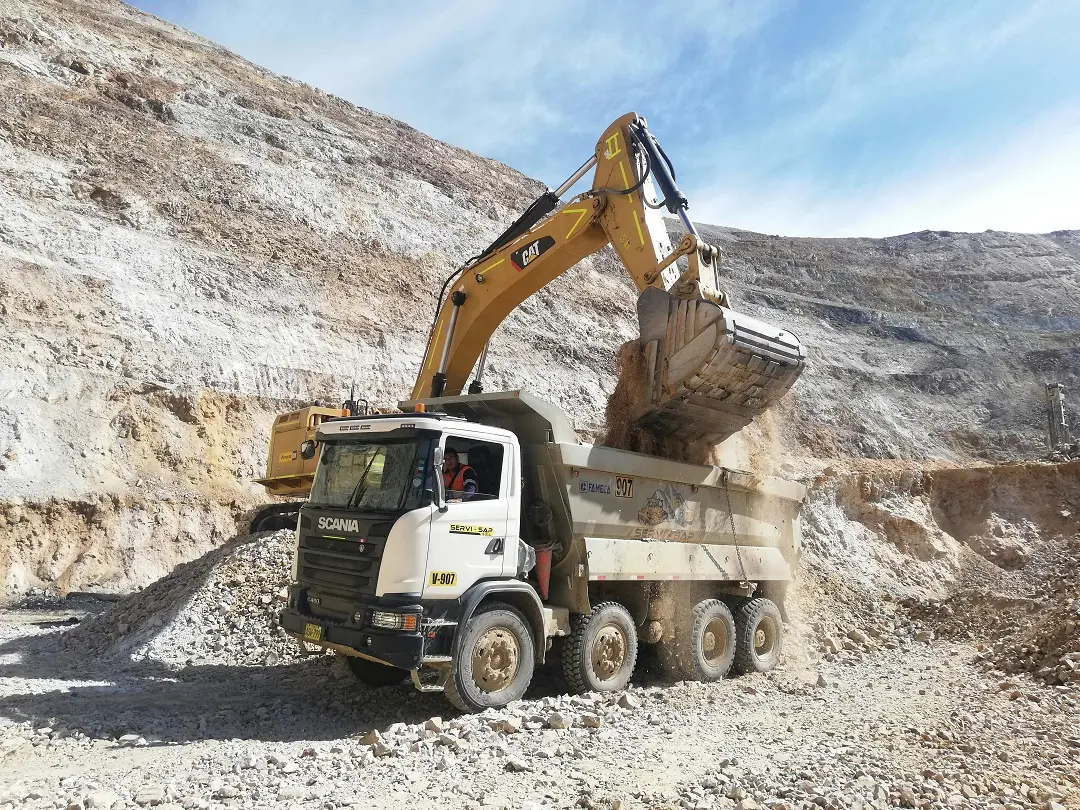
Earthworks Estimating: Why Productivity Assumptions Determine Profitability
In earthworks, profitability is rarely lost in the total cubic yards. It is lost in the assumptions behind those cubic yards. Many bids fail not because the quantities were wrong but because the production rates tied to those quantities were unrealistic.
Serious earthworks estimating requires more than takeoffs. It demands geotechnical interpretation, soil segmentation, equipment productivity analysis and haul cycle evaluation.
Volume Alone Does Not Define Cost
A project may show 75,000 cubic yards of cut and fill. On paper, that seems straightforward. But cost is not determined by volume alone. It is determined by:
- Soil classification
- Moisture content
- Shrink/swell factors
- Equipment selection
- Haul distance
- Site constraints
- Production cycle time
The same 75,000 CY can vary dramatically in cost depending on these variables. Soil Type Can Change Production by 20–40%, Clay and sand do not move the same.
Dense clay can reduce excavator bucket fill efficiency, increase truck loading times and slow grading operations. Wet conditions further compound the issue. Granular soils, by contrast, allow faster loading, easier compaction and higher daily output. Failing to segment volumes by soil classification can lead to production assumptions that are off by 20–40%. That difference is often the entire project margin.
Haul Distance & Cycle Time:
The Silent Margin Killers Haul analysis is one of the most overlooked components of mass grading estimates.
Key factors include: Average haul distance Internal site routing Elevation changes Traffic interference Dump location access Truck capacity vs. loader output Even a minor miscalculation in cycle time can result in: Underestimated truck quantities Idle loading equipment Lower daily production Extended schedule durations When equipment sits idle, margins disappear.
Why Geotechnical Data Must Drive the Estimate:
Accurate earthworks estimating begins with a thorough review of:
- Boring logs
- Soil classifications
- Groundwater levels
- Compaction requirements
Existing site conditions Instead of applying a blended production rate across total volume, the estimator must:
- Segment quantities by soil type.
- Apply appropriate shrink/swell factors.
- Model production rates based on soil condition.
- Align equipment fleets accordingly.
- Evaluate haul scenarios.
This is where precision is built into the bid. Equipment Selection Must Match Soil and Haul Conditions Production is directly tied to equipment configuration. For example: Larger excavators may increase bucket size but reduce maneuverability. Fewer trucks increase wait time. Incorrect compaction equipment can slow finish grading.
A reliable estimate evaluates:
- Excavator productivity per soil class
- Truck cycle time and fleet balance Dozer efficiency in cut/fill conditions
- Compaction pass requirements
Without this alignment, the numbers may look accurate but the field performance will not match.
Earthworks Estimating Is a Modeling Process, Not Just a Takeoff Modern earthworks estimating should function like a production model. It is not enough to measure quantities.
The estimator must simulate:
- How the material will be moved How long it will take
- What resources are required
- What daily output is achievable
Only then can the bid reflect realistic field conditions. Precision Drives Profitability
In competitive bidding environments, especially for public and large-scale private projects, margins are tight. The contractors who consistently win and remain profitable are those who:
Base production on geotechnical data. Analyze haul logistics thoroughly Model equipment productivity accurately. Build contingencies around soil risk.
Earthworks success begins long before the first machine mobilizes. It begins in the estimate.
Profit in earthworks comes from realistic production assumptions, not just quantities.
Soil type, haul distances and equipment choices can change output by 20–40%.
Serious contractors model soil, haul and equipment before bidding, not after.
Accurate geotech data and production modeling protect your margins.
Earthworks estimating is a production strategy, not just a takeoff.